The Hill Tracts are a shared region, not a single culture. Rangamati, Khagrachhari and Bandarban are home to Bengali residents and to distinct Indigenous peoples whose languages, histories, faiths, clothing, political experiences and everyday lives cannot responsibly be collapsed into one “tribal” identity.
This guide offers principles, not permission. A local host, community institution or the person concerned remains the authority on what may be entered, recorded, named or shared.
Start with words
Specificity is a form of respect
Use Chittagong Hill Tracts or CHT for the region and name the district when it matters. When writing about a people, use the name its members use in that setting. Chakma, Marma, Tripura, Mro/Mru, Tanchangya, Bawm, Pangkhoa, Khumi, Khyang, Lushai, Chak and others are not interchangeable labels. Spellings and preferred collective terms vary across languages, institutions and individuals. Ask, record the answer, and preserve diacritics or locally preferred romanisation where possible.
In Bangladesh, Adivasi, “Indigenous,” Jumma, “ethnic minority,” and government terms such as khudro nrigoshthi carry different legal, political and personal meanings. Do not select a label merely because it seems neutral. Attribute institutional language when reporting it and let people self-identify in profiles. Avoid “primitive,” “untouched,” “exotic,” and the singular phrase “the tribal culture.”
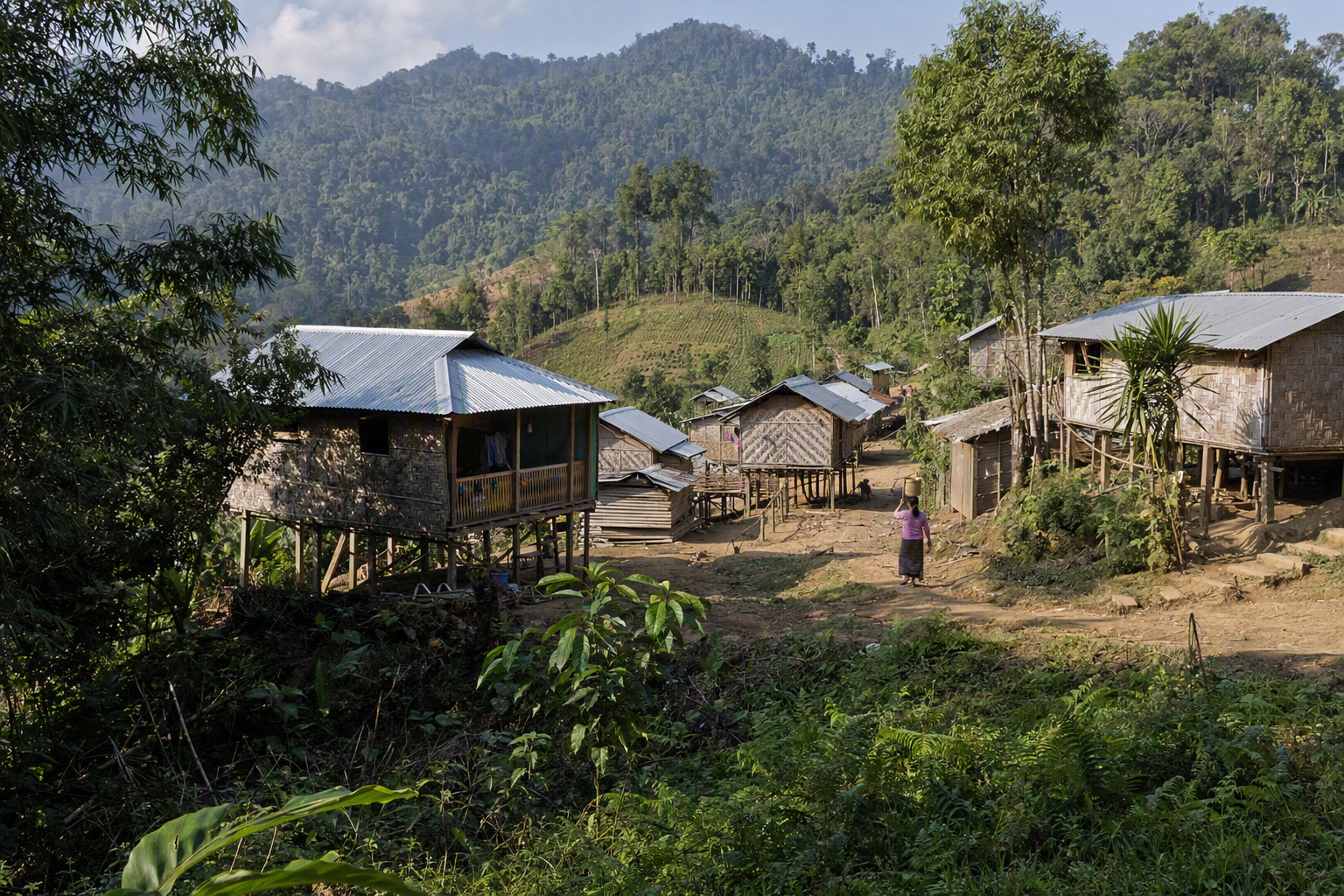
Place names and community names should come from the people who live there; a landscape is home, livelihood and contemporary life, not an anonymous backdrop.
Everyday encounters
Consent is a continuing conversation
People and photographs
A smile, a public setting or agreement to one portrait is not blanket consent. Ask before raising the camera. For children, seek the child’s assent and a parent or guardian’s permission. Name people only with agreement. Show the image when practical, explain intended use, and accept “no” without persuasion. Never photograph someone in distress or turn poverty, labour or worship into spectacle.
Sacred and private space
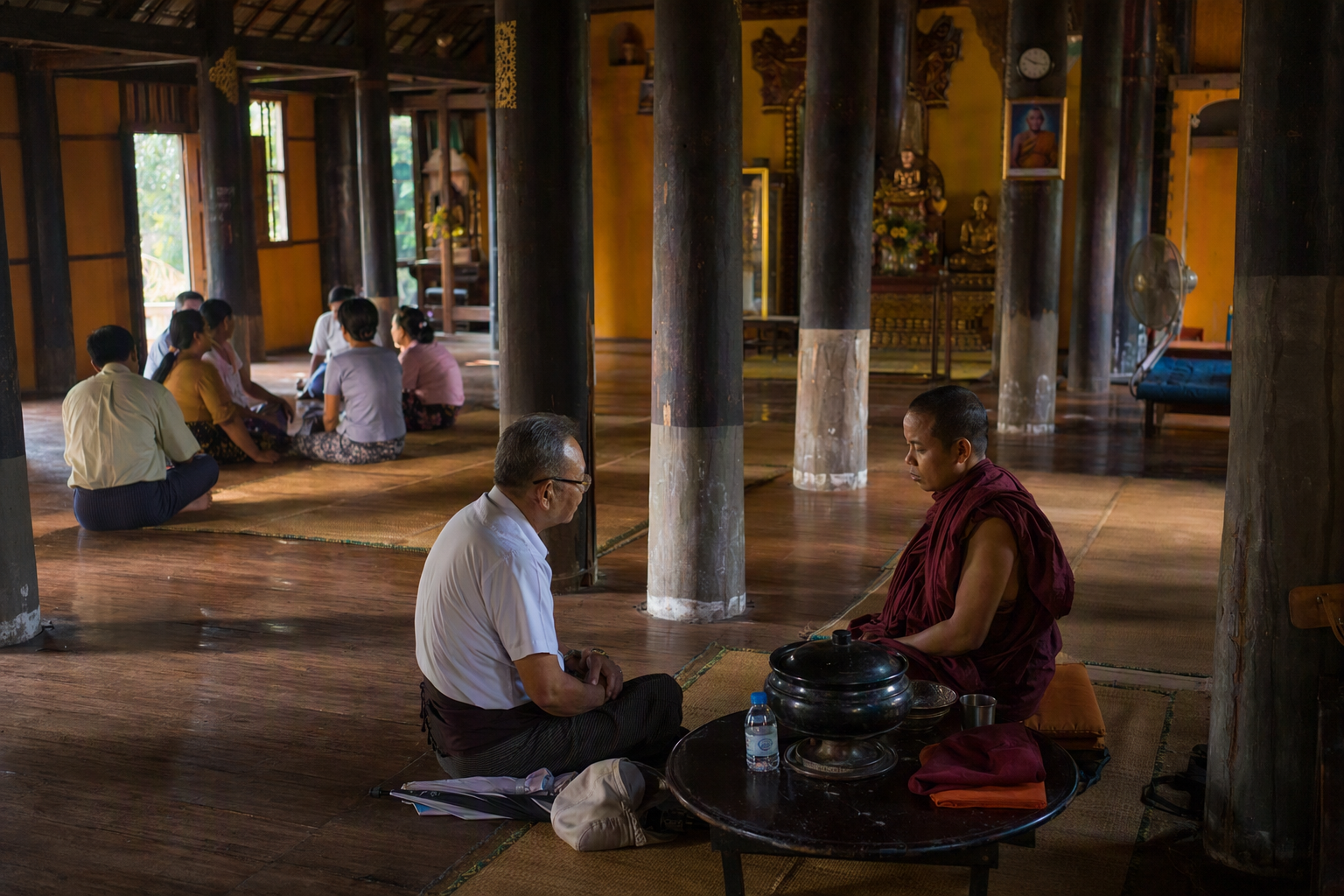
Temples, monasteries, churches, grave or memorial sites, ritual objects, household altars and community forests may have rules invisible to a visitor. Stop at thresholds, follow signs, remove shoes when asked and seek guidance before entering or recording. Access granted to you does not automatically include permission to publish location details or images.
A Marma Buddhist monastery is both a place of faith and daily community life. Ask before entering, photographing or publishing location details.
Markets and exchange
Weekly haat markets are working spaces and social networks, not open-air sets. Keep aisles clear, ask before photographing traders or goods, and buy before requesting a long interview. Bargain gently only where bargaining is customary. Do not describe unfamiliar produce as “strange,” and do not assume every item or seller represents one community.
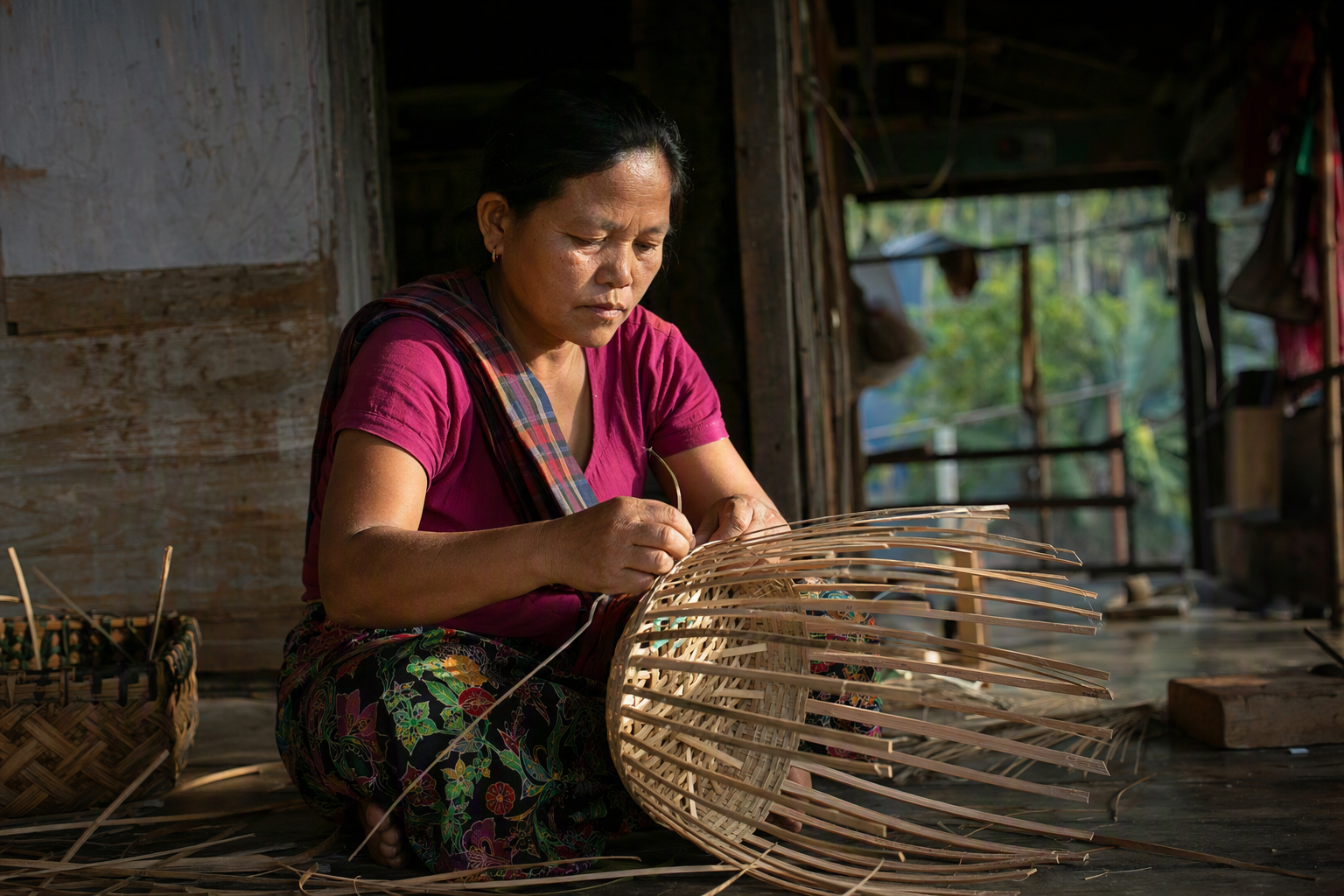
Bamboo work is skilled labour. Credit the Tripura maker, agree on photography, and pay fairly for the object and time.
Living, changing, community-held
Food, cloth and festivals need context
Food is more than a list of dishes
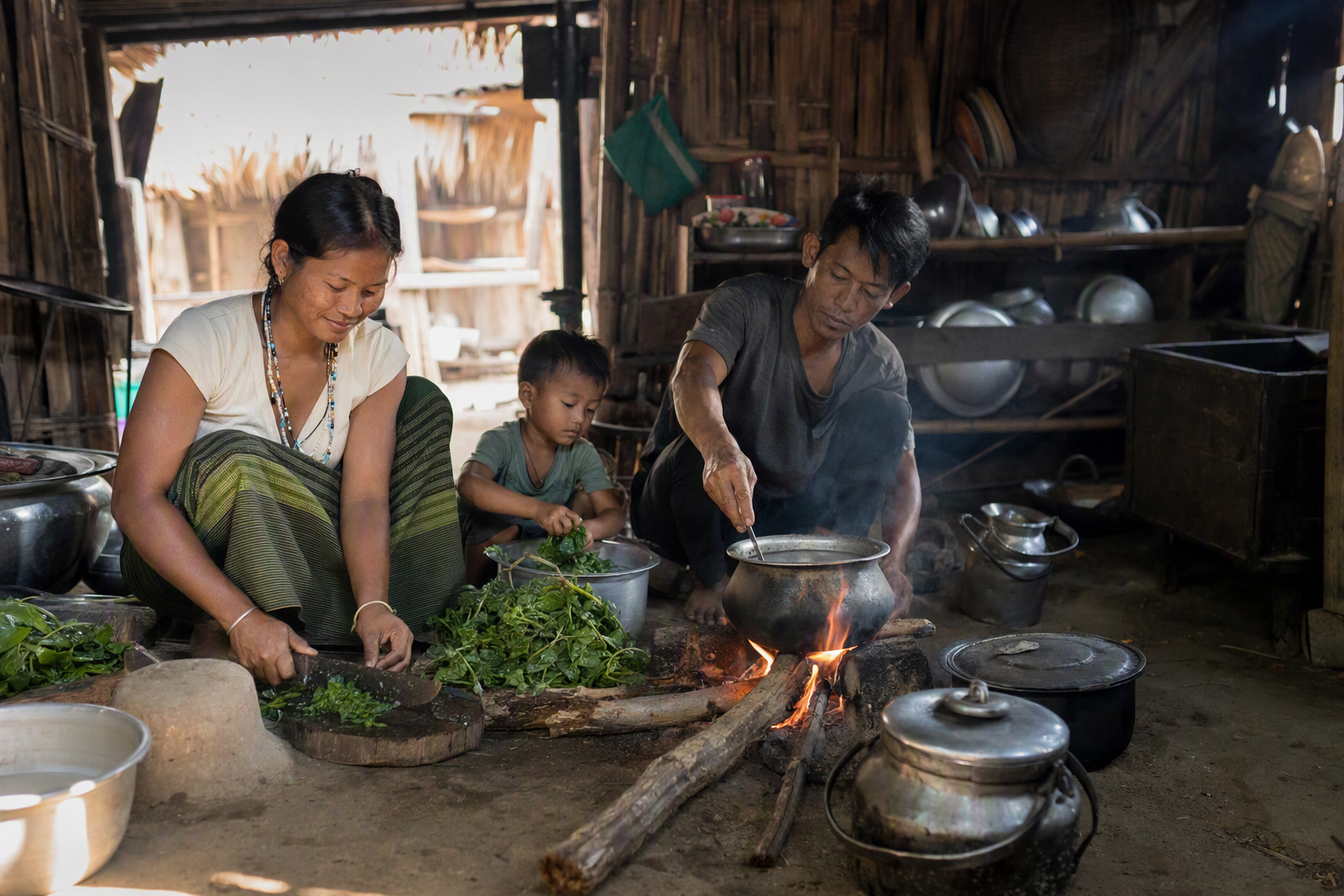
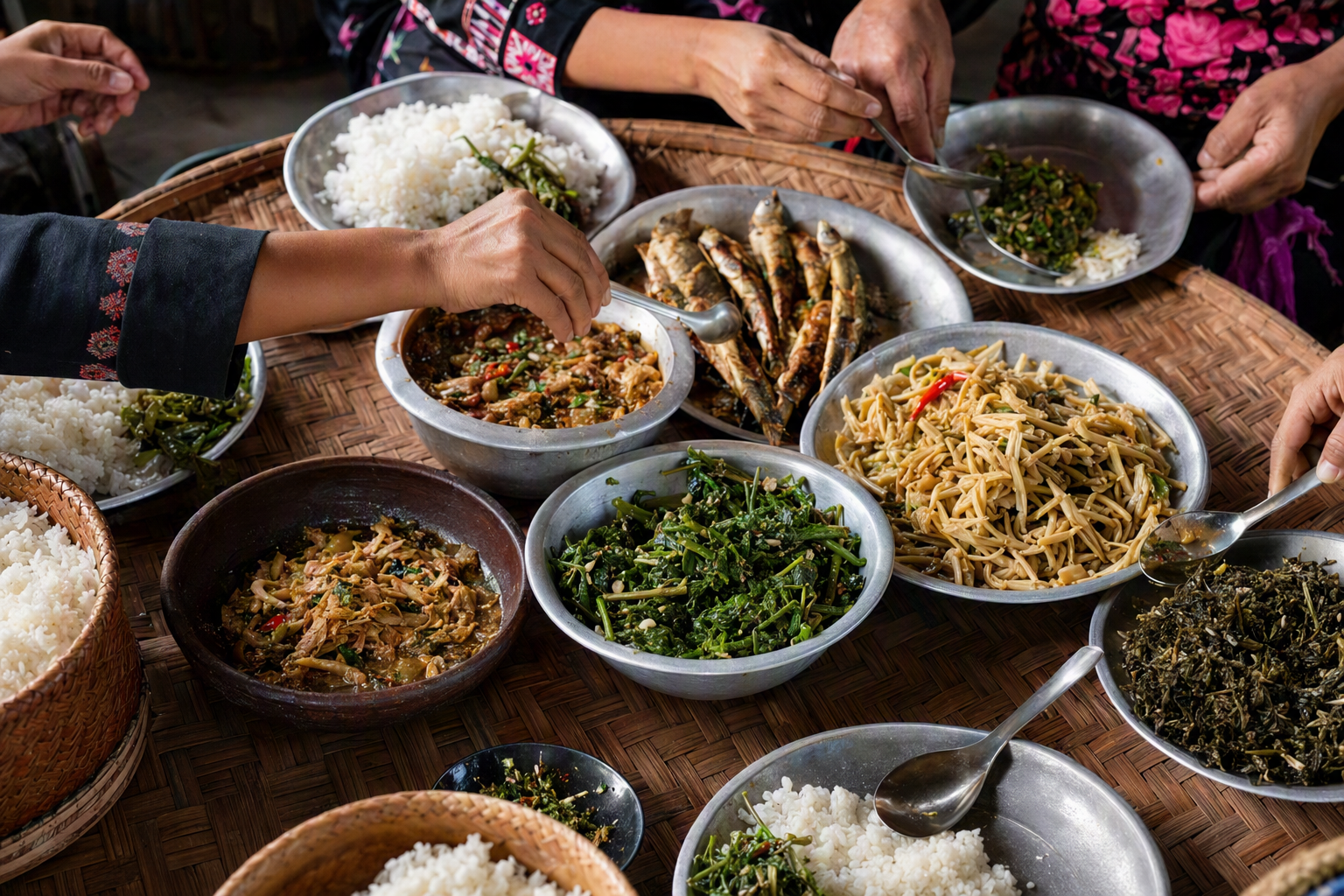
Rice, seasonal greens, bamboo shoots, fish, chillies and fermented or dried ingredients appear in many CHT kitchens, but recipes, names, restrictions and meanings differ by household and community. Ask who prepared a dish and how they describe it. Mention season, place and occasion. Do not market one meal as “authentic tribal food,” and never pressure a host to serve, reveal or stage something private. Ask about allergies and dietary or religious boundaries in both directions.
In a Tanchangya kitchen, ingredients, names and methods belong to a particular household and occasion; ask before documenting preparation.Describe what hosts call each dish and note place, season and occasion rather than presenting one table as a universal CHT menu.
Weaving carries skill, authorship and livelihood
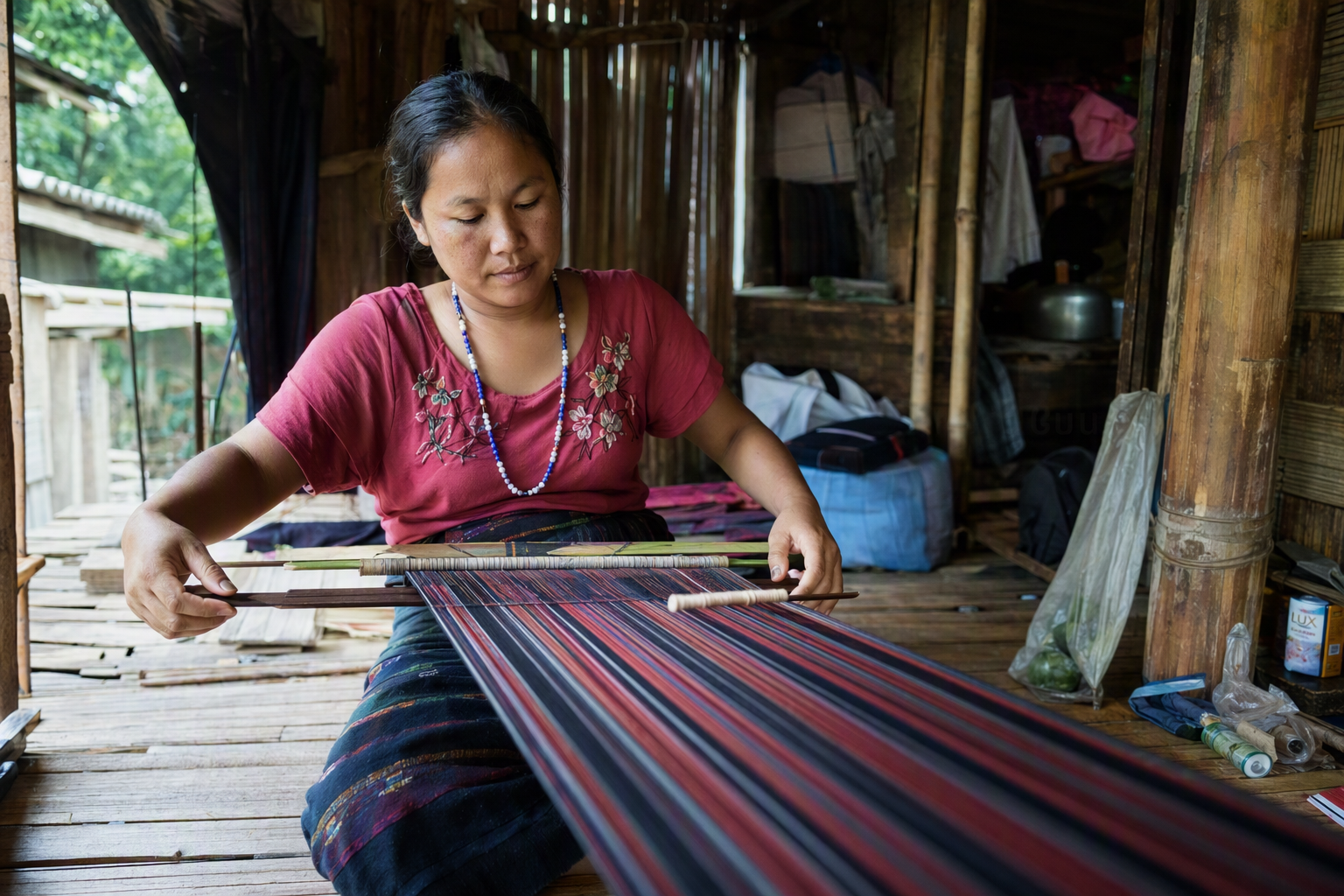
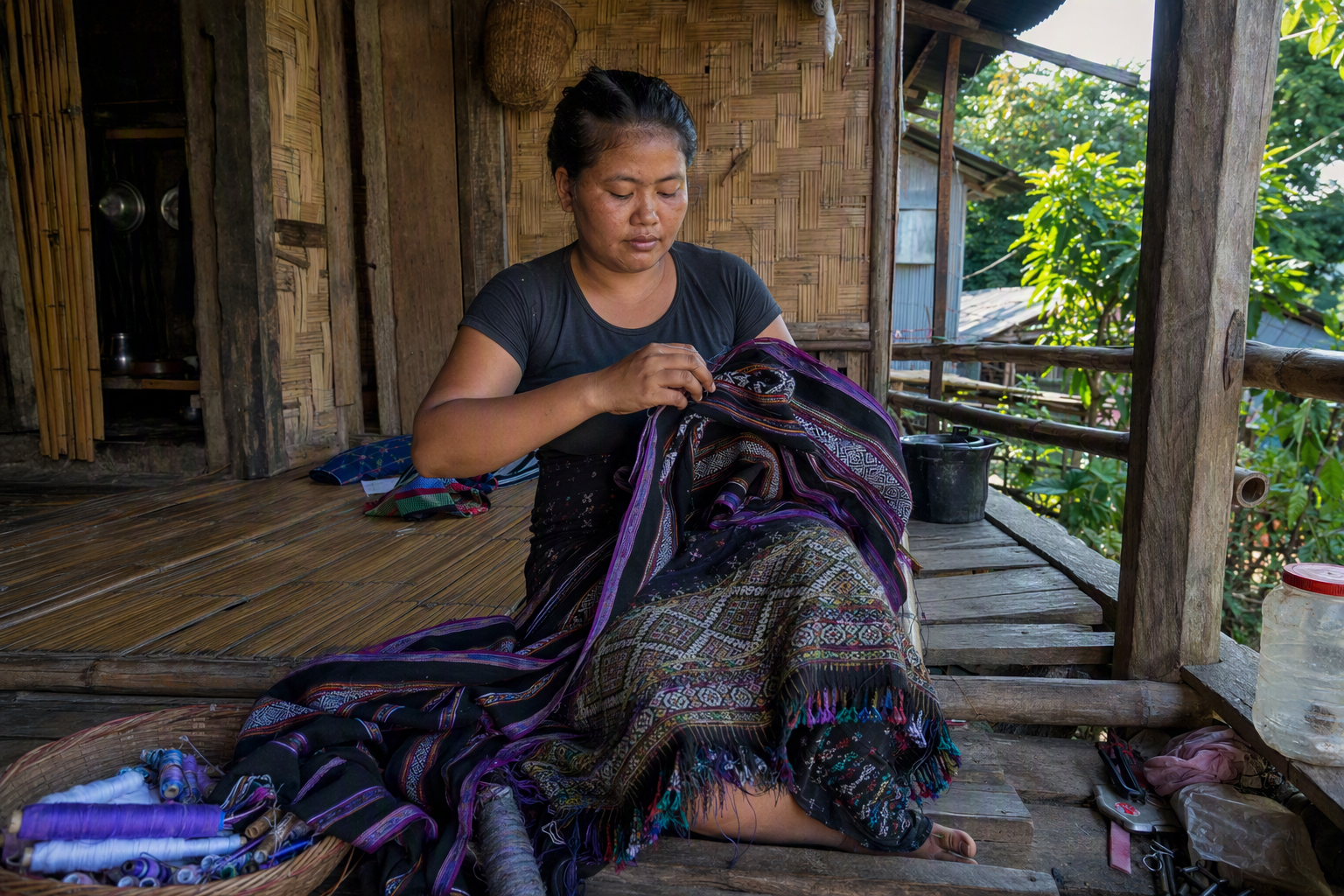
Backstrap and other looms are used in parts of the region, and handwoven textiles can communicate community belonging, personal taste, age, occasion and innovation. Motifs and garment names are not a universal CHT code. Ask the weaver what may be documented, credit the maker rather than only the shop, do not copy patterns for commercial use, and pay the stated price. A loom in a home is a workplace, not an invitation to enter.
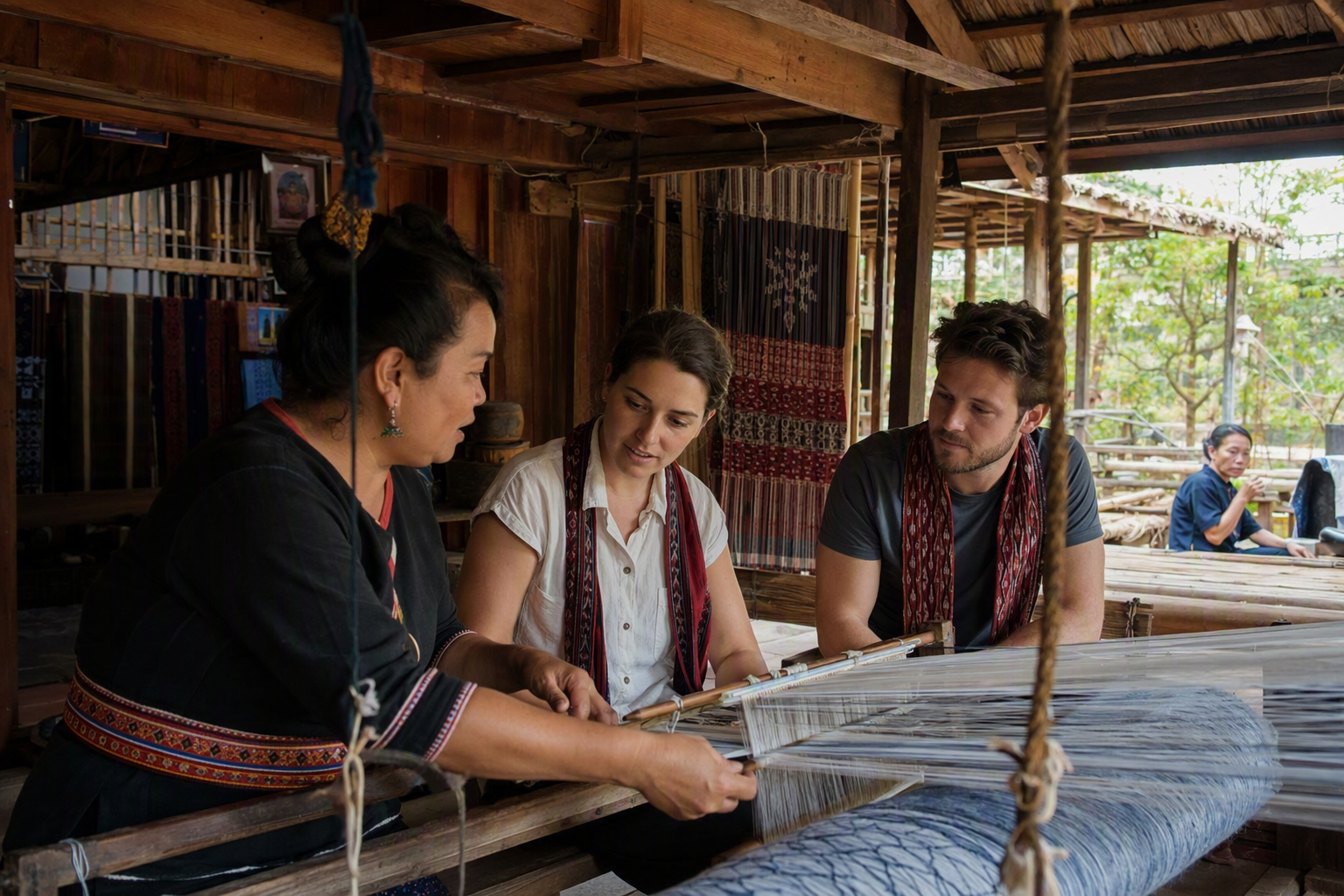
A Chakma artisan at a backstrap loom. Record the maker’s name and chosen terminology, and seek permission before reproducing motifs.A Bawm artisan working with handwoven cloth on a home veranda. A domestic work setting is not automatic permission to enter or record.A cultural weekend should leave time for conversation, consent and fair exchange rather than turning a workshop or shared tea into a scheduled performance.
Festivals are plural
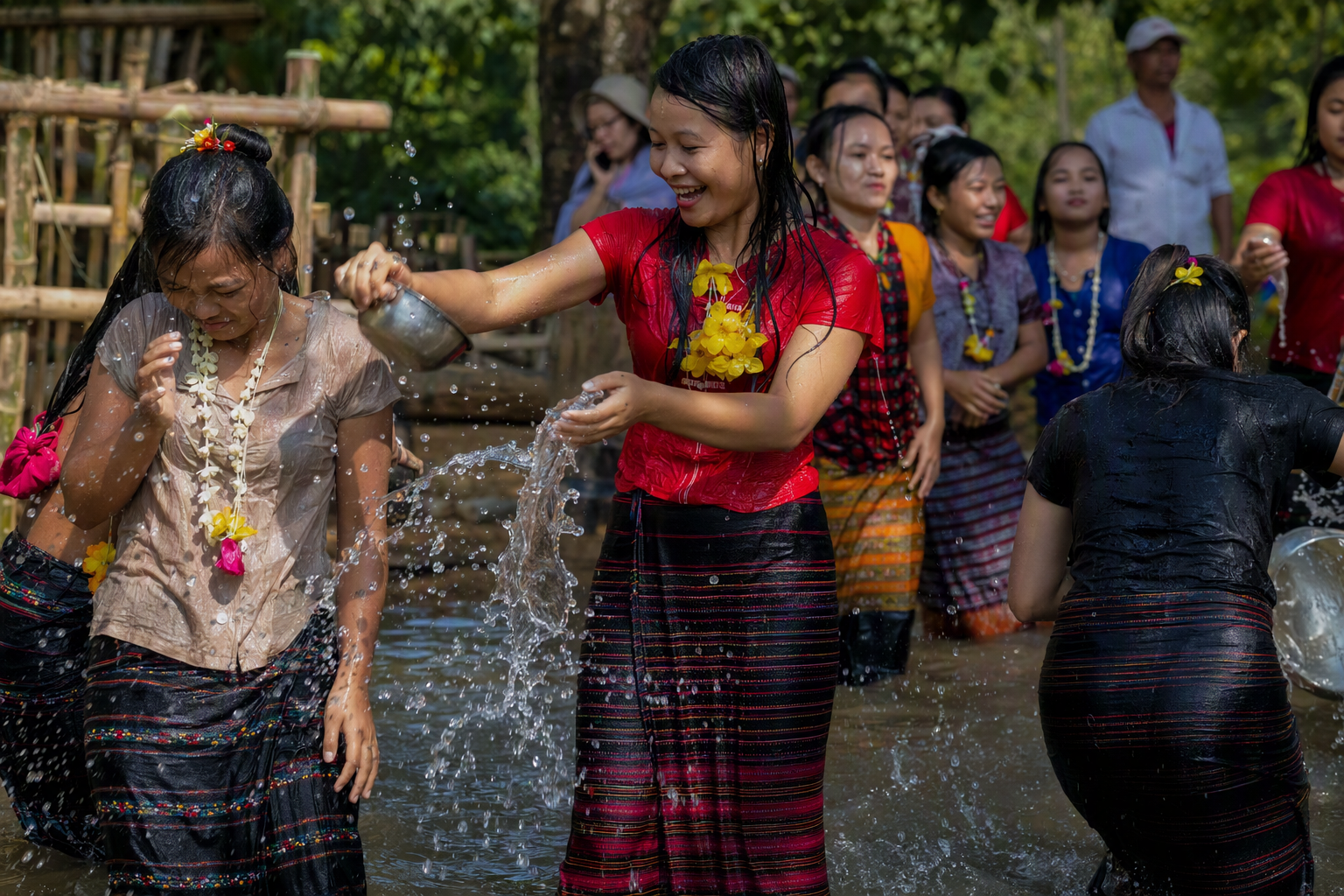
New-year observances around April are often grouped in public language as Boisabi, a combined name associated with distinct celebrations including Tripura Buisu, Marma Sangrai and Chakma Bizu. Shared timing does not erase different names, practices or religious meanings. Other communities keep their own calendars and observances. Confirm the local name, date and open or restricted portions each year. Join only when invited, dress for the setting and avoid directing rituals for a photograph.
A public April new-year water celebration. Confirm the event’s local name, community context and open portions before joining or photographing.
A visitor’s compact
Practical respect
Do
Travel with locally accountable guides where access or protocol is unclear.
Learn greetings only from a speaker who can explain pronunciation and context.
Ask before entering a home, field, loom space or place of worship.
Pay fairly for guiding, interpretation, food, crafts and people’s time.
Carry waste out and follow current district travel and safety guidance.
Leave room for ordinary life: school, phones, politics, work and change.
Do not
Collect stories, designs, seeds, ritual knowledge or geotags as souvenirs.
Offer money to manufacture a ceremony or pose children.
Assume dress, religion or language from appearance.
Publish a sacred, vulnerable or private location without explicit agreement.
Describe communities as frozen in the past or disappearing for dramatic effect.
Banglapedia, “Chittagong Hill Tracts”, for regional geography, the three districts and broad historical context. Some terminology in this older reference is not adopted by this guide.
Editorial boundary: This overview intentionally avoids claiming that a practice belongs uniformly to a whole community. Details should be checked with participating people and community-informed sources at the time of reporting. Last editorial review: August 2026.