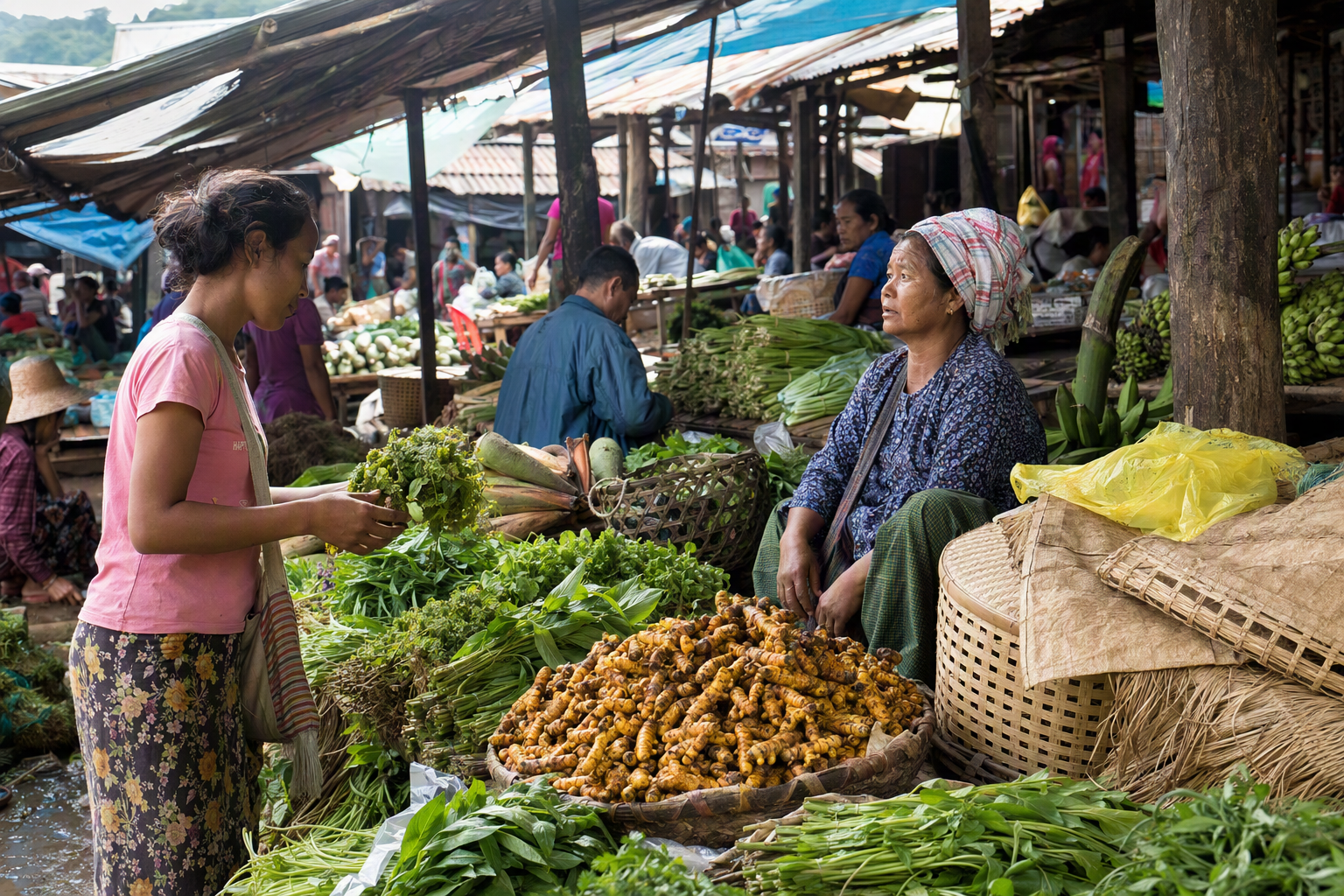
Before a customer asks the name of a leaf, someone has harvested, sorted, carried and arranged it. That chain of work is a better opening than surprise.
Arrive without taking over
Markets connect rural producers, town retailers, transport workers and households. Indigenous and Bengali sellers and buyers may share the same physical space without sharing the same language, history or economic position. Do not infer community identity from clothing or inventory. If identity matters to the story, ask privately and explain why.
Keep out of paths, do not rest equipment on goods and do not expect a seller to pause during the busiest hour. Buy something if you need it, but never treat a purchase as payment for a portrait or interview. Negotiate photography, conversation and compensation separately.

Name food at the right scale
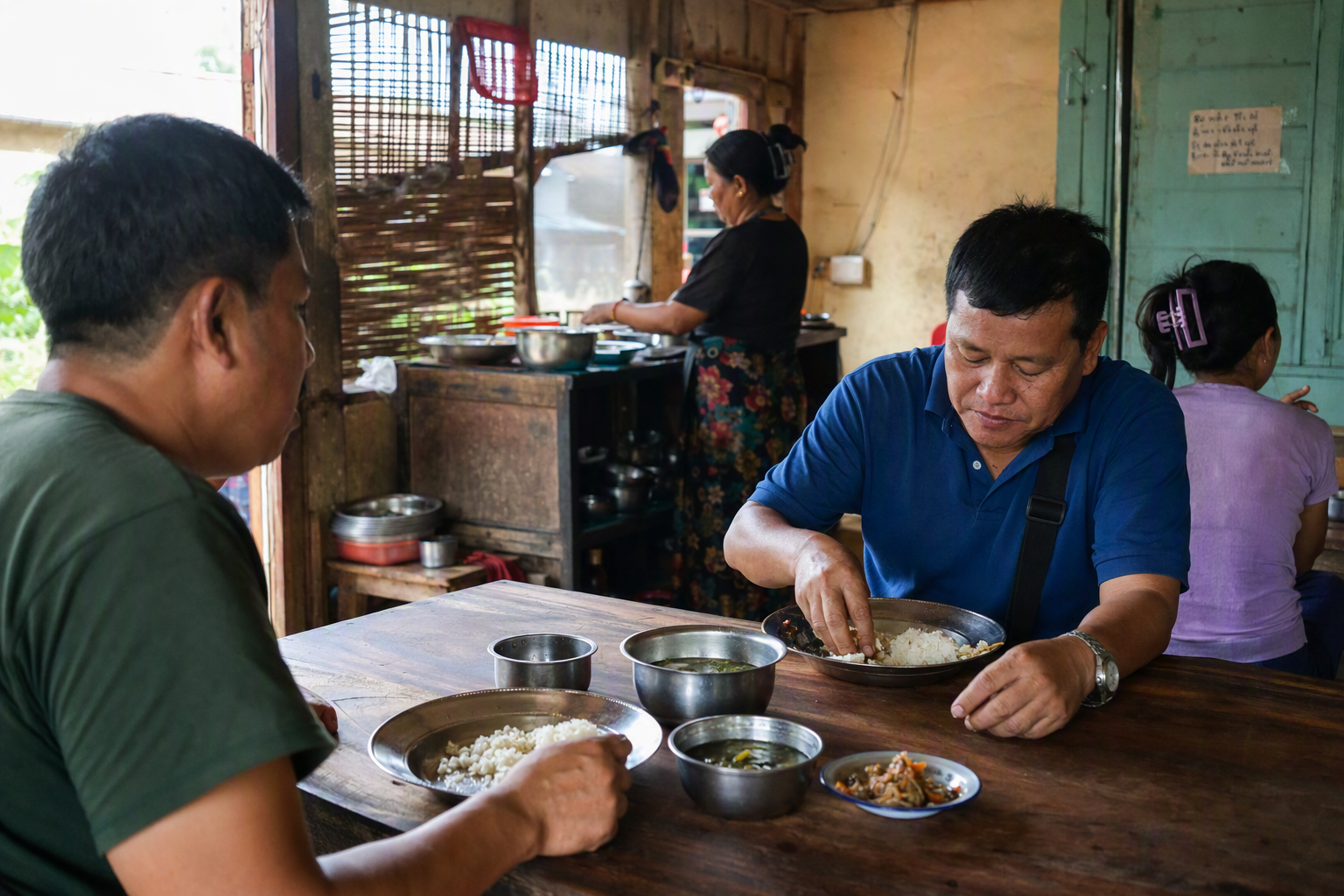
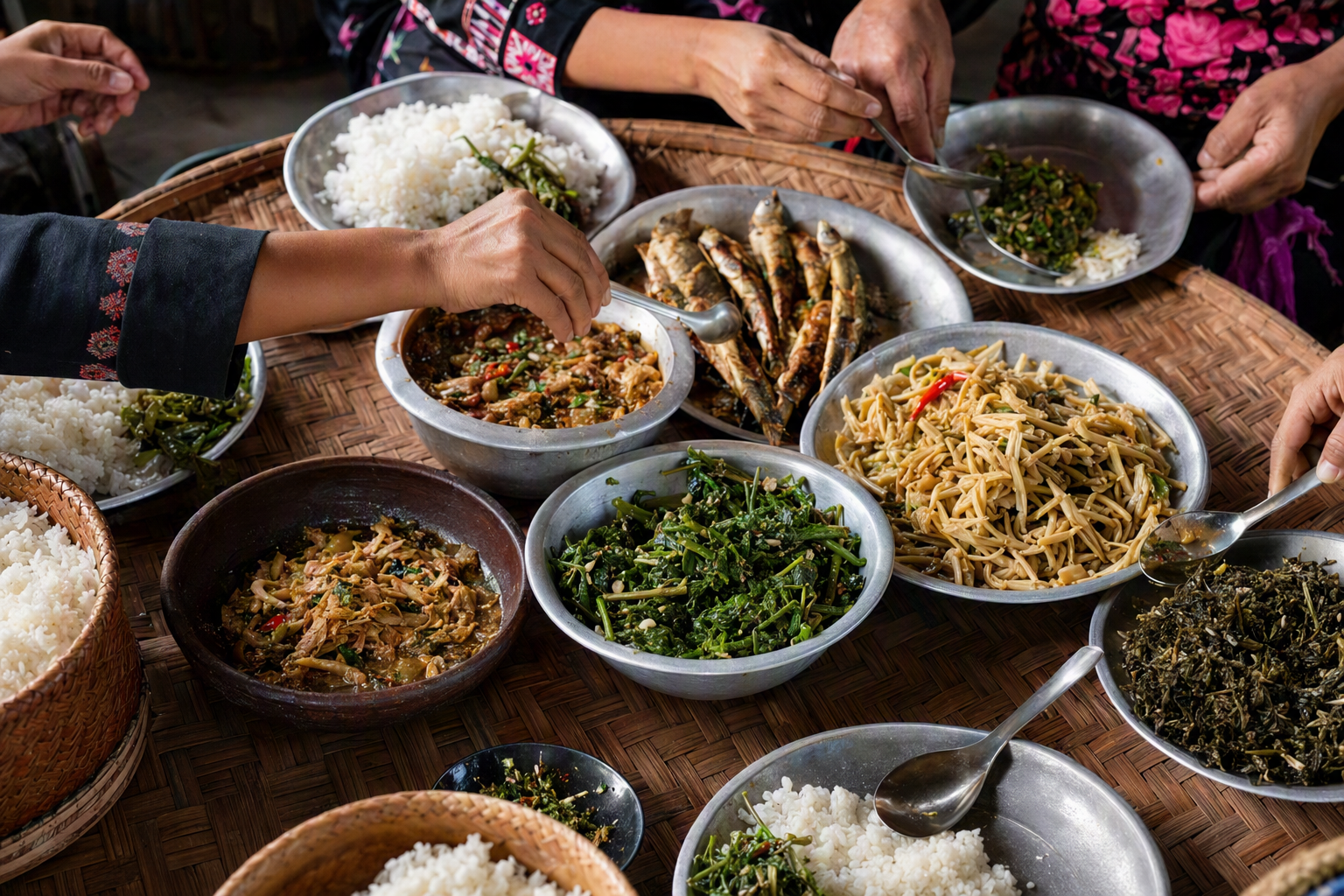
A bundle may have names in several local languages and Bangla. Record the speaker, language and spelling rather than choosing the most marketable label. Ask how that household prepares it, not how “the hill people” eat it. Rice, vegetables, bamboo shoots, fish, spices and preserved ingredients cross community boundaries, while techniques, tastes, religious rules and access differ.
Season is part of accuracy. What appears in one monsoon morning may be absent in the dry months. Cultivated, gathered and purchased foods have different stories, and the same item can move through more than one route. Avoid calling forest products “free” simply because no shop sold them; collection requires knowledge, time, access and care.
The ethics of the close-up
A tight photograph can detach hands from a person and a product from its context. Ask before photographing goods, especially medicines, ritual materials, hunted wildlife or anything whose sale may be sensitive. Do not publish an image that could expose a seller to harm. When in doubt, put the camera down and ask a locally informed editor.
Children near stalls are not public decoration. Seek their assent and guardian permission, and consider whether the image adds anything beyond charm. Often a wide view, a still life made with the seller or no photograph at all tells the story better.
Price is a relationship
A visitor may celebrate low prices that represent thin margins for a producer. Ask who set the price, what transport cost and whether the seller wants prices published. Bargaining practices vary. A respectful buyer follows local cues, avoids aggressive haggling and does not claim moral credit for paying a fair amount.
For woven goods, baskets or prepared foods, credit the maker when known. A reseller is not necessarily exploiting a maker; they may provide transport, market access and credit. Report the chain rather than guessing at it. If you plan to reproduce a design, recipe or detailed technique commercially, a market purchase alone does not grant that right.
Leave with fewer generalisations
The strongest market story ends smaller than it began: one seller’s working day, one crop’s route, one multilingual exchange. It leaves the market available for next week’s business rather than converting it into evidence for a timeless, uniform “hill culture.”