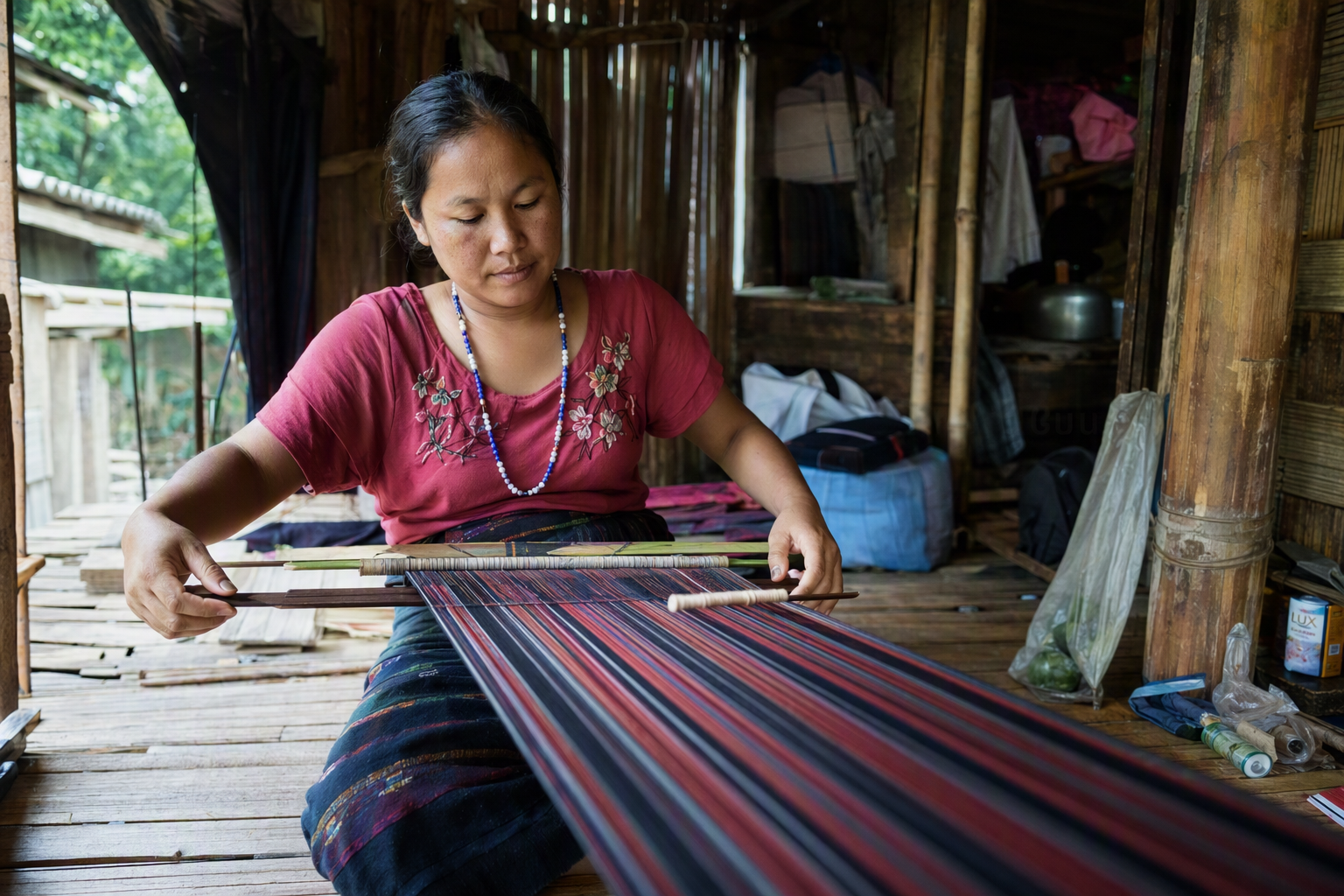
In a lakeside neighbourhood in Rangamati district, the sound a visitor notices first may be the beater settling one line of cloth. The person working hears more: tension, count, a missed thread, rain beginning on the roof, a boat arriving, a customer asking when an order will be ready.
Work before symbol
Writing about CHT textiles often begins with colour and ends with “tradition.” That sequence hides the worker. Begin instead with decisions: sourcing thread, preparing a warp, counting repeated elements, correcting errors, setting a price and fitting weaving around care, farming, study or other paid work. Some knowledge travels within families; some makers learn from neighbours, cooperatives, schools or experimentation. Contemporary fibres and new colour choices do not make the work less meaningful.
Backstrap looms are used by members of several communities in the region, but this shared technology does not create a single textile language. Chakma, Marma, Tripura and other makers may use different garment names, structures, motifs and conventions. Even within one community, no single pattern speaks for everyone. The responsible caption names only what the maker confirms.
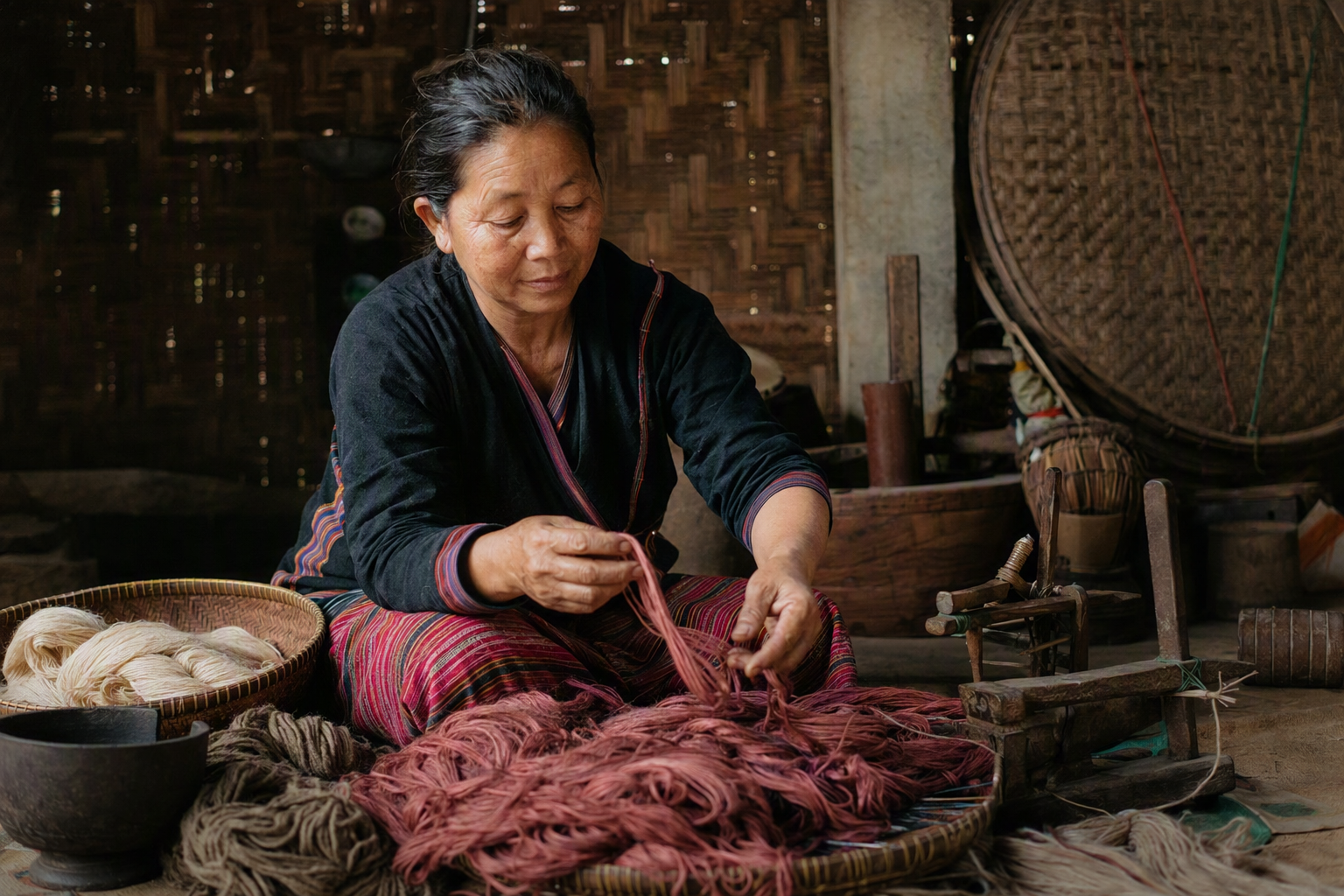
The useful question is not “What does every motif mean?” It is “What would this maker like us to understand about this piece?”
The address includes water
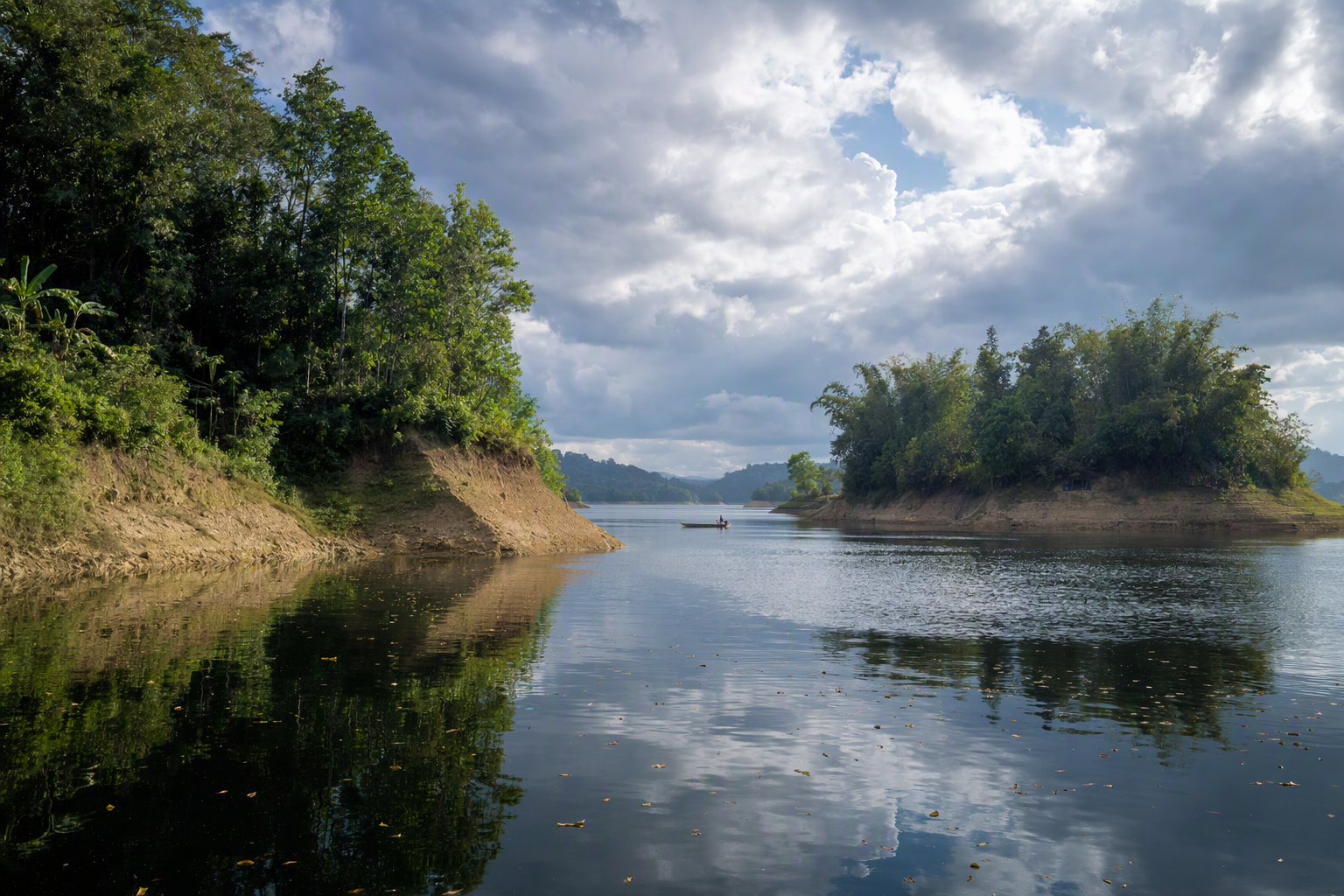
Rangamati is shaped by the Karnaphuli river system and Kaptai Lake, the reservoir formed by the Karnaphuli hydroelectric project in the early 1960s. Academic and rights-based accounts document the large-scale displacement that followed, much of it affecting Chakma people and other communities. A lake photograph can therefore hold beauty, livelihood and loss at once. Calling it simply “serene” edits history out of the frame.
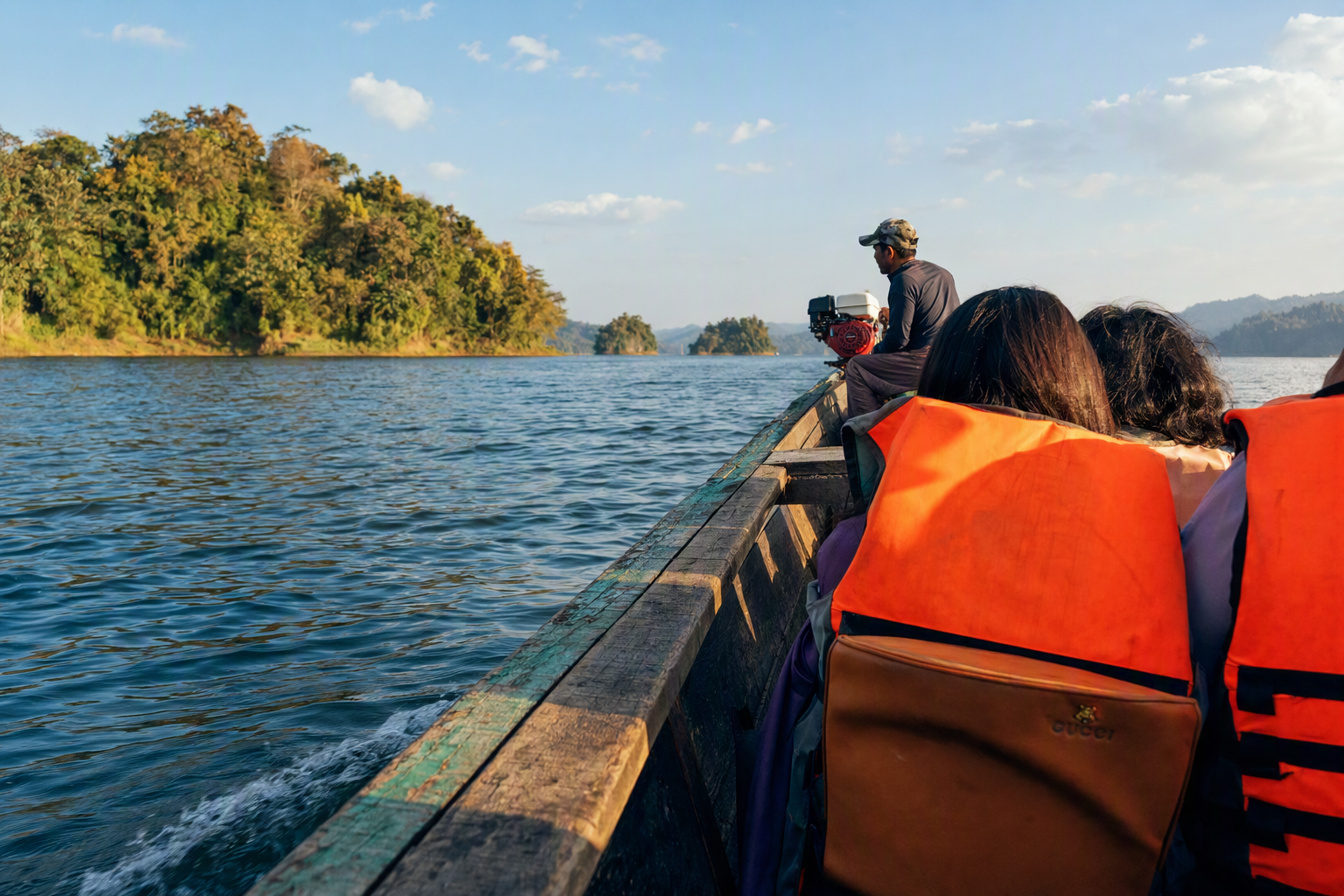
Water also structures present routines. Boat routes connect homes, markets and services. Seasonal levels can alter landing places and travel time. Yet “lakeside life” is not a cultural trait, nor is every Rangamati resident’s relation to the reservoir the same. Ask a contributor whether the water belongs in their story and which history they want named.
When the camera enters the room
A loom may be tied within a home. Permission to discuss weaving does not grant access to bedrooms, family members, prayer spaces or everything visible behind the worker. Agree on the frame before photographing. Ask whether a work in progress may be shown, since it may be commissioned, commercially sensitive or carry knowledge the maker does not want copied.
Consent must include distribution. A maker may accept a photograph in an article but not a downloadable pattern study, advertisement or training dataset. Record those limits. Credit labour in the visible caption, link to a seller or collective when requested, and discuss payment independently from the purchase of cloth.
A better ending
Do not end by declaring that a tradition “survives.” Ask what would make the work viable on terms makers choose: fair prices, reliable materials, time, safe transport, control over designs, apprentices who want to learn, or markets that value authorship. Culture is not saved by a visitor’s admiration. It is sustained by people with the authority and conditions to keep changing it.